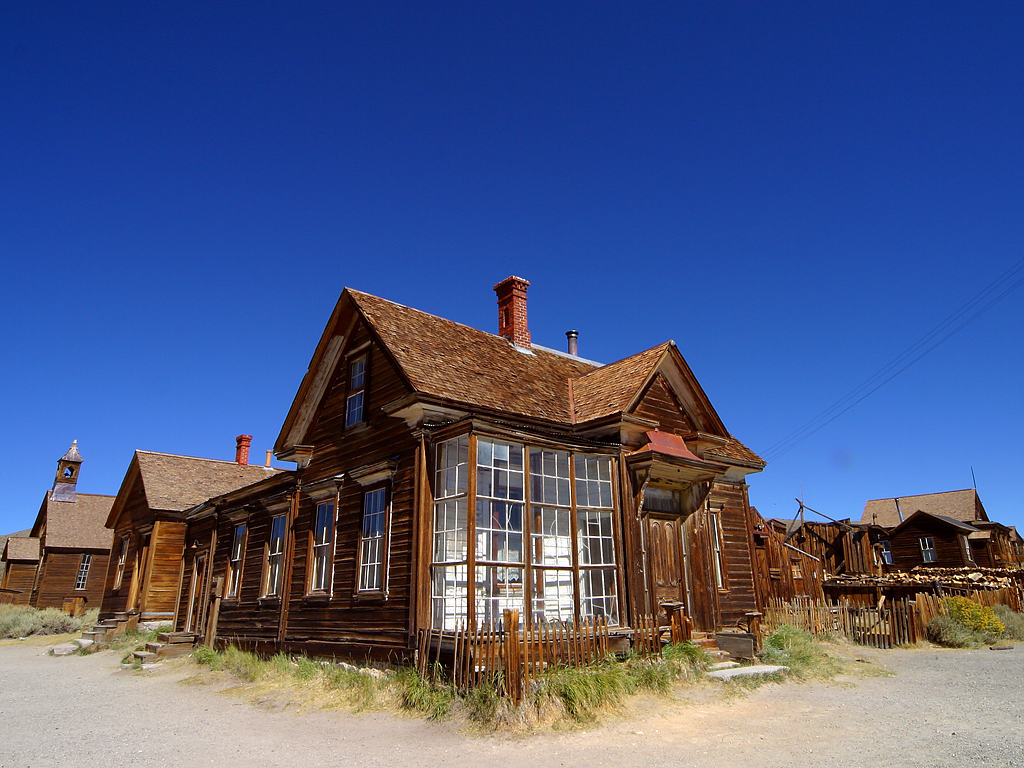
Bodie, California
The Bodie Bank vault, its heavy iron door still swung open inside the collapsed and skeletal remains of the bank building — the door's ornate cast lettering and combination mechanism intact and readable from the open exterior walls.

Philadelphia, Pennsylvania
The mismatched rooflines and facade widths along the alley's north side, where houses built across more than a century sit shoulder to shoulder — some with pent eaves projecting between the first and second floors, a distinctly Philadelphian feature that breaks the cornice line in irregular intervals down the block.
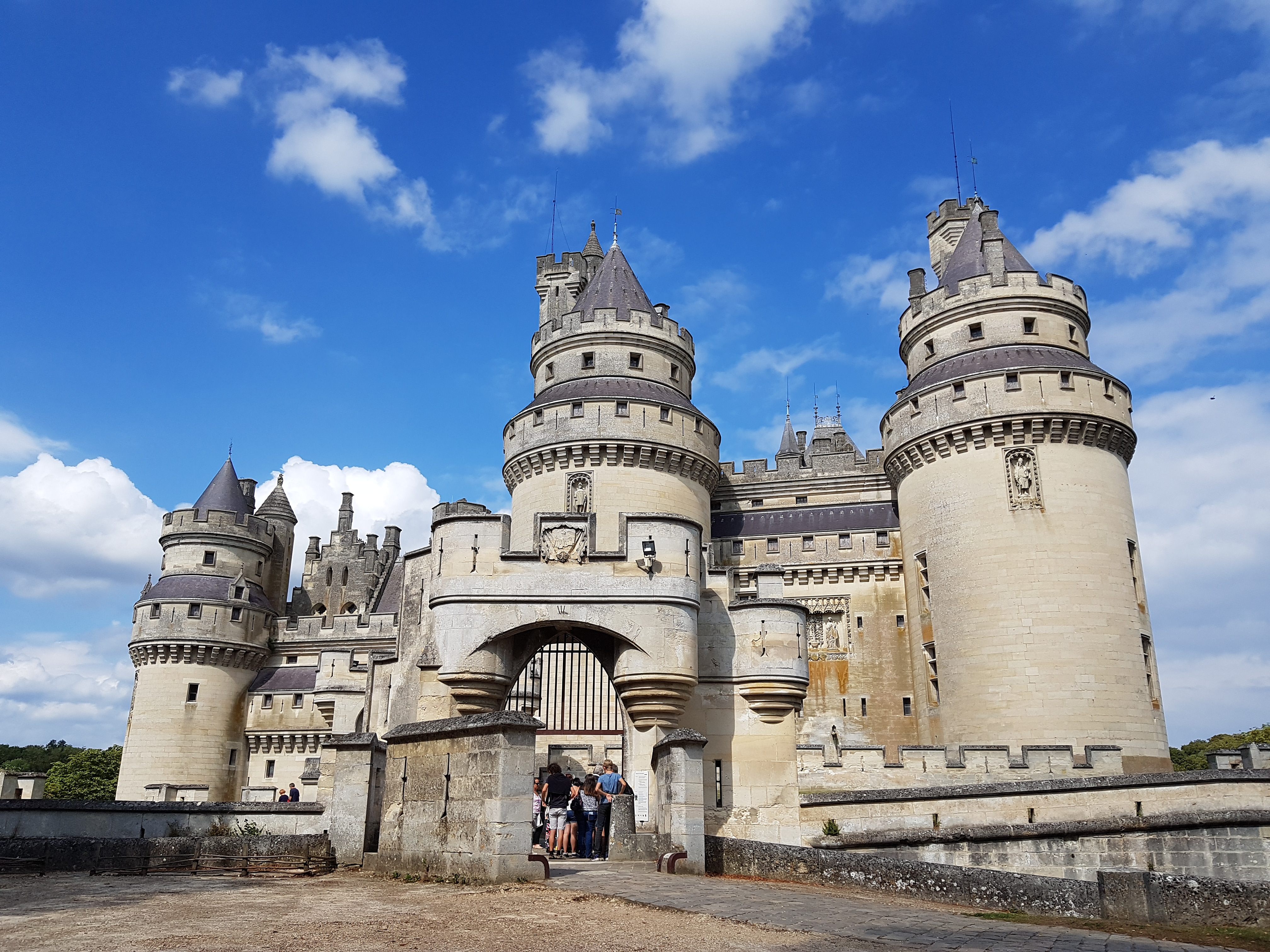
Pierrefonds, France
The sculpted figures of nine female allegorical knights — each representing a virtue — mounted in niches along the exterior of the main residential range, armor-clad and individually characterized, their stone faces weathered but still distinct.
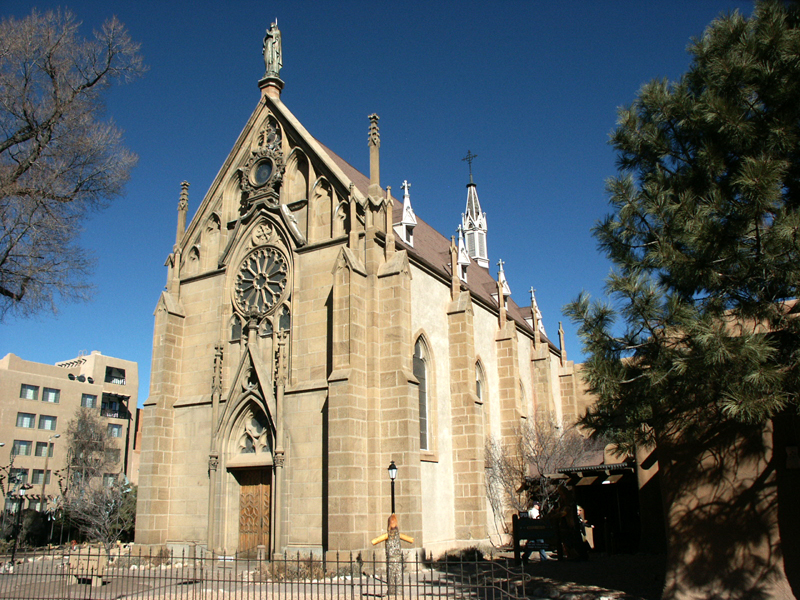
Santa Fe, New Mexico
The helix staircase rising to the choir loft — two full 360-degree turns in wood, assembled without nails or glue, with no central pole visible at the core.
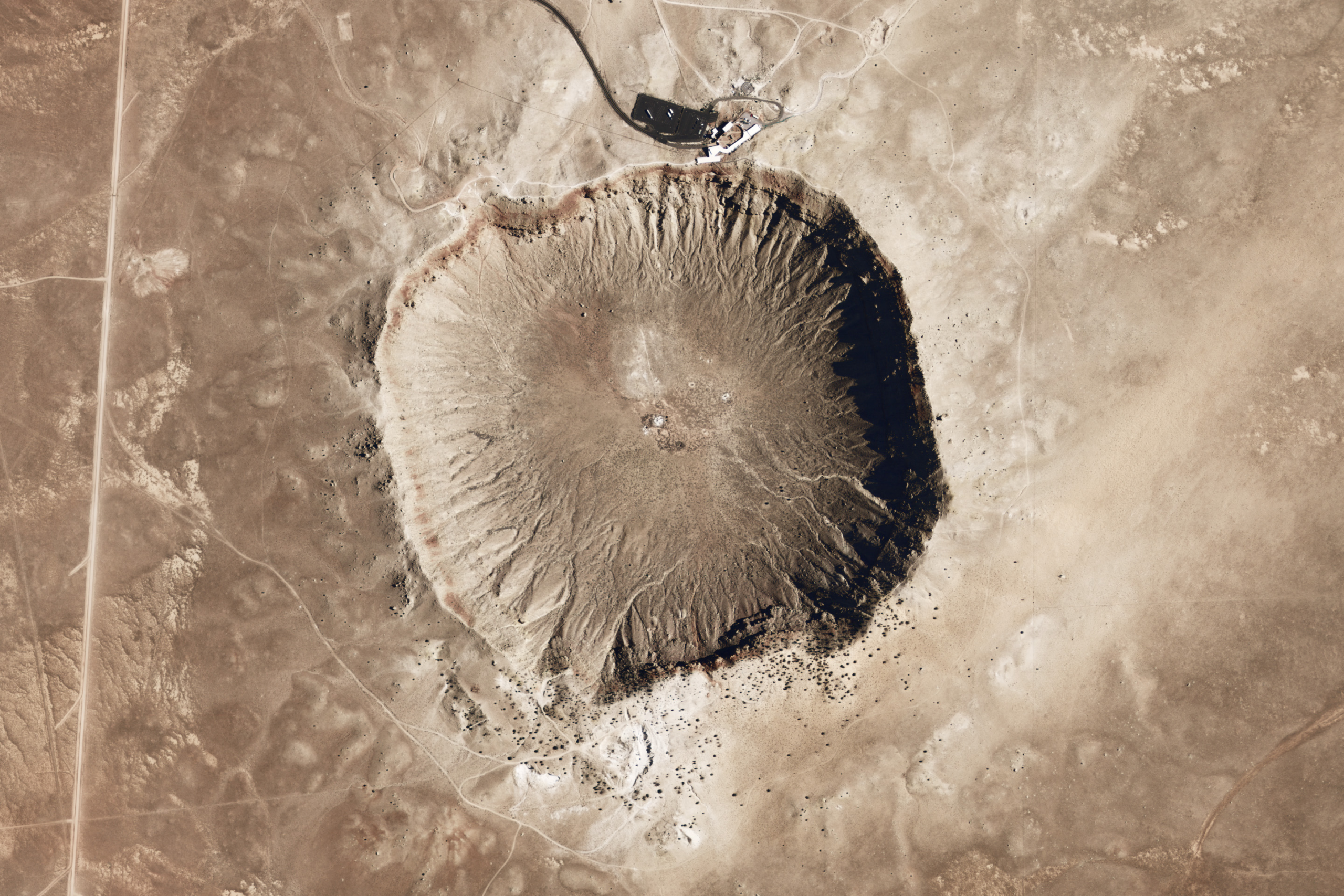
Winslow, Arizona
The exposed crater walls show rock strata that have been tilted upward and in places completely overturned — layers of Coconino sandstone, Kaibab limestone, and Moenkopi formation folded back on themselves by the blast, with older rock sitting visibly above younger rock in a sequence that runs opposite to how geology normally stacks.

Taos, New Mexico
The roofless shell of the original San Geronimo mission church at the edge of the compound, its partially standing bell tower rising above an adjacent graveyard with wooden crosses pressed close to the adobe walls.

Avebury, United Kingdom
The small concrete marker posts — low, rectangular, and pale gray — standing in the grass beside re-erected sarsen stones throughout the henge, placed by Alexander Keiller in the 1930s to mark the original positions of stones that could not be recovered or identified.

Sandia Park, New Mexico
The exterior walls of the museum building embedded with thousands of glass bottle bases — circular, translucent, mortared flush with the concrete so the cross-section of each bottle forms a green or brown disc in the wall.
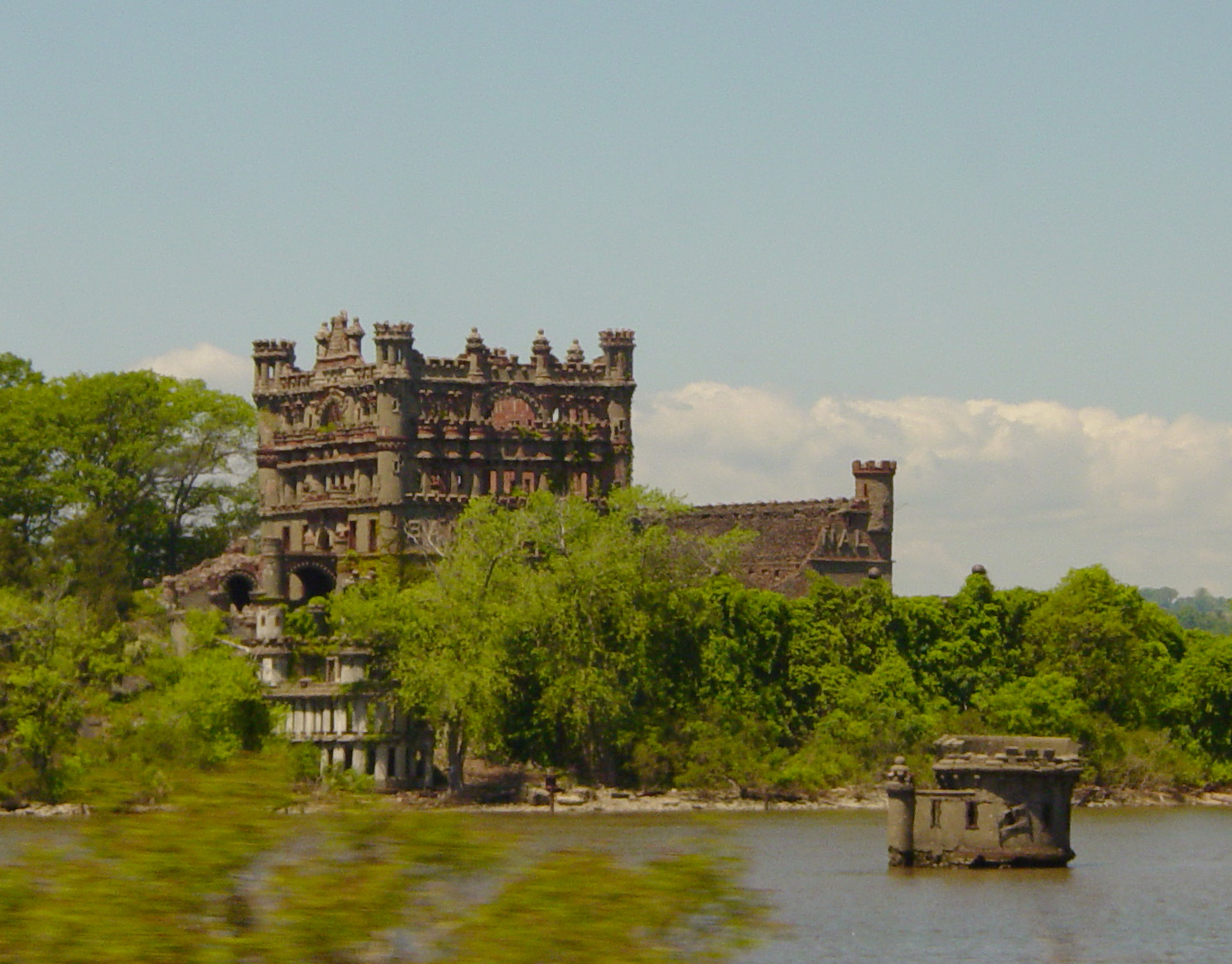
Pollepel Island, New York
The large block letters spelling "BANNERMAN'S ISLAND ARSENAL" cut directly into the river-facing facade of the main warehouse building, still legible from the water despite more than a century of exposure and partial structural collapse around them.
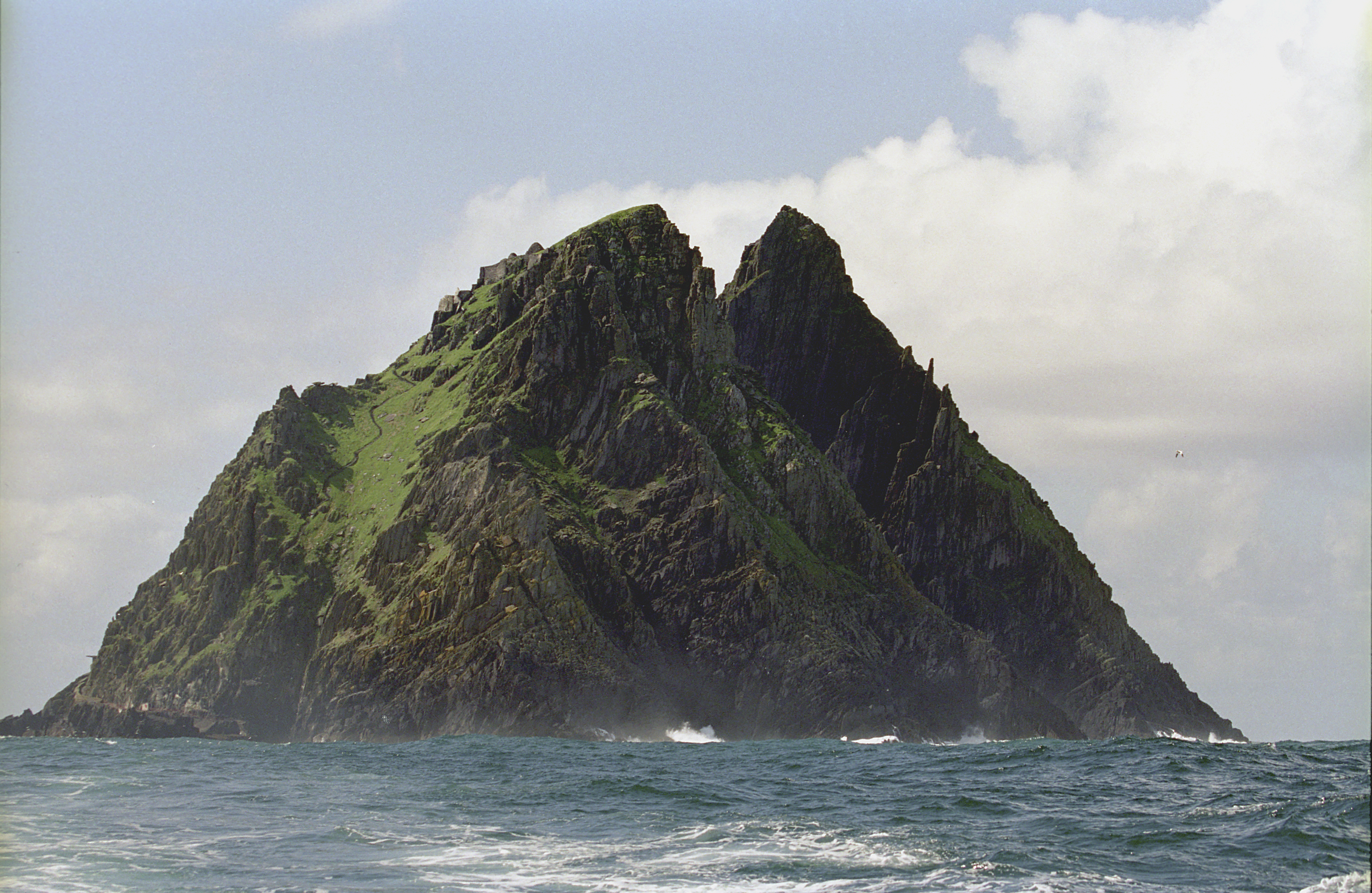
County Kerry, Ireland
The corbelled roofs of the six beehive huts (clocháns) visible from Christ's Saddle — each one a rounded stone dome built without mortar, their overlapping courses tightening inward to a sealed apex, structurally unchanged since the early medieval period.
