
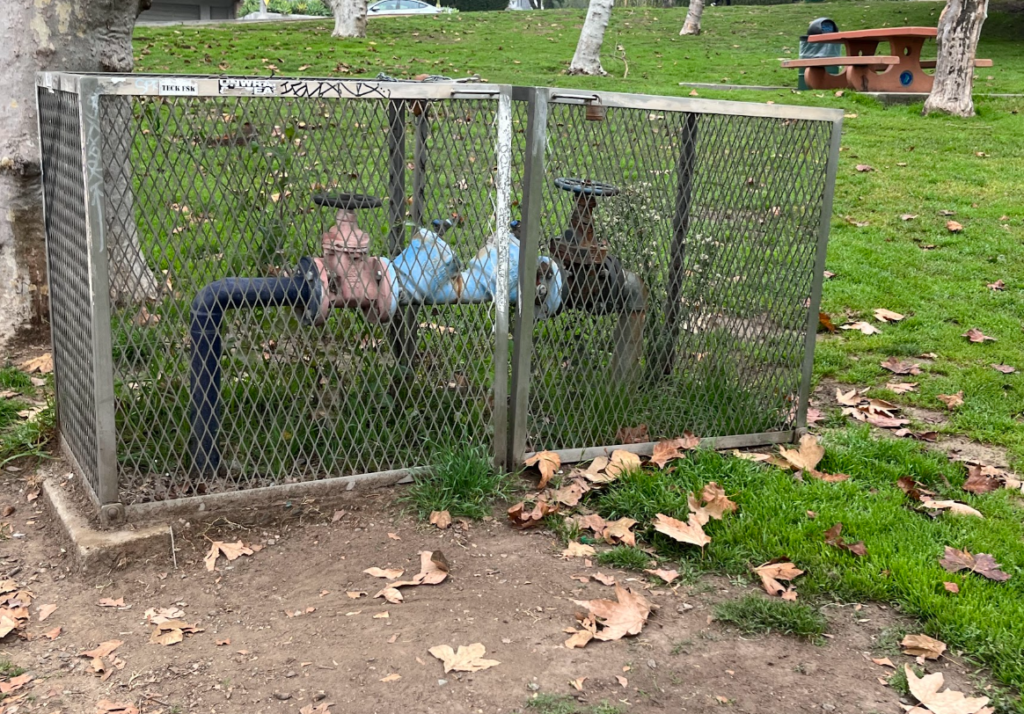
You’re walking through your neighborhood and there it is: a valve assembly locked up like it contains nuclear codes. Chains. Padlocks. Sometimes a full metal cage. All of this security theater protecting… water pressure.
What’s going on?
The Things Cities Guard
Every city has infrastructure it doesn’t want you touching. Fire hydrants get their own bollards. Electrical boxes get locked panels. And pipes—especially the ones that control water flow—get chains, cages, and sometimes hilariously elaborate protection systems.
That blue valve assembly with chains wrapped around it? That’s regulating pressure for an entire neighborhood. Turn the wrong wheel and you’ve either flooded a street or cut off supply to a hundred homes. The city’s not worried about sophisticated sabotage. They’re worried about bored teenagers, curious kids, an out-of-control car, or someone who thinks they’re helping by “fixing” something.
The mesh cages do the same job with different paranoia. They say: “Yes, this is important. No, you cannot reach it. Yes, we know it looks ridiculous.”

What Happens When Infrastructure Goes Wrong
Infrastructure is invisible until it breaks. That chained valve? It’s probably been there for decades, doing its job in silence. But one wrong adjustment and suddenly a street floods, basements fill, or a whole block loses water for hours.
The cage isn’t about theft. It’s about keeping the system boring. Functional—which is exactly what keeps cities running.

The Hierarchy of Protection
Not all infrastructure gets equal security. Walk around and you’ll notice: some valves get chains, some get nothing. Some get mesh cages, some get painted shut, some get buried under locked lids.
Here’s what cities prioritize:
High pressure systems get the most protection. Anything regulating flow for multiple buildings or streets. Break it and you’ve created a problem that takes hours or days to fix.
Accessible infrastructure gets caged. If it’s at sidewalk level where anyone can reach it, it gets locked. If it’s in a fenced utility area or underground vault, often just a standard cover does the job.
Older systems sometimes get retrofitted protection after problems emerge. That’s why you’ll see rusty blue paint on chains—someone decided that valve needed protection after it had been there for 30 years.
Regional variation matters too. Cities with vandalism problems cage more aggressively. Cities in colder climates protect different infrastructure than warm-weather cities. Coastal cities worry about corrosion. Desert cities worry about sun exposure breaking plastic components.

Reading Your City’s Priorities
Once you start noticing protected infrastructure, you’re reading your city’s anxiety map. What does it protect? What does it leave exposed? Where does it invest in security versus hoping for the best?
Those mailbox-shaped covers? That’s not paranoia—that’s design thinking. Make it obvious, make it distinctive, make it impossible to confuse with anything you should be opening. It’s infrastructure as communication: “Yes, this is here. No, it’s not for you.”
The chained valve says: “This is important but we’re too budget-strapped for a proper enclosure.” The mesh cage says: “We’ve had problems here before.” The painted-shut valve says: “This hasn’t been adjusted in years and we’re hoping it never needs to be.”
Every protection system is a story. You just have to notice it.
Why This Matters
Because cities aren’t just buildings and streets. They’re systems. Hidden systems that only reveal themselves when they fail. And the things cities choose to protect tell you what they can’t afford to lose.
Those caged pipes aren’t art, exactly. But they’re evidence. Evidence of function, maintenance, municipal priorities, neighborhood history. They’re the city’s way of saying: “This matters. Please don’t touch it.”
And if you’re the kind of person who wonders why things are the way they are—if you’re curious about the infrastructure you walk past every day—then you’re already hunting. You just didn’t know there was a name for it.
The world is a game. The city is full of unnoticed details. We’re repurposing them as scavenger hunt targets. Join the adventure.