
Giardino dei Tarocchi
Capalbio, Italy
Story
Niki de Saint Phalle spent two decades building a garden she intended to live inside. Not beside — inside. The Giardino dei Tarocchi, which she began in the Tuscan hills near Capalbio in 1979, is a sculpture park built around 22 monumental figures drawn from the Major Arcana of the tarot. The largest of them, the Empress, is also a house: a mirror-tiled structure big enough that Saint Phalle herself slept within its breast for years while construction continued around her. She paid for much of the project by launching her own line of perfume, Niki de Saint Phalle, in 1982 — using the proceeds to fund concrete, steel armature, and the thousands of square feet of mirror mosaic that now catch the Maremma sun.
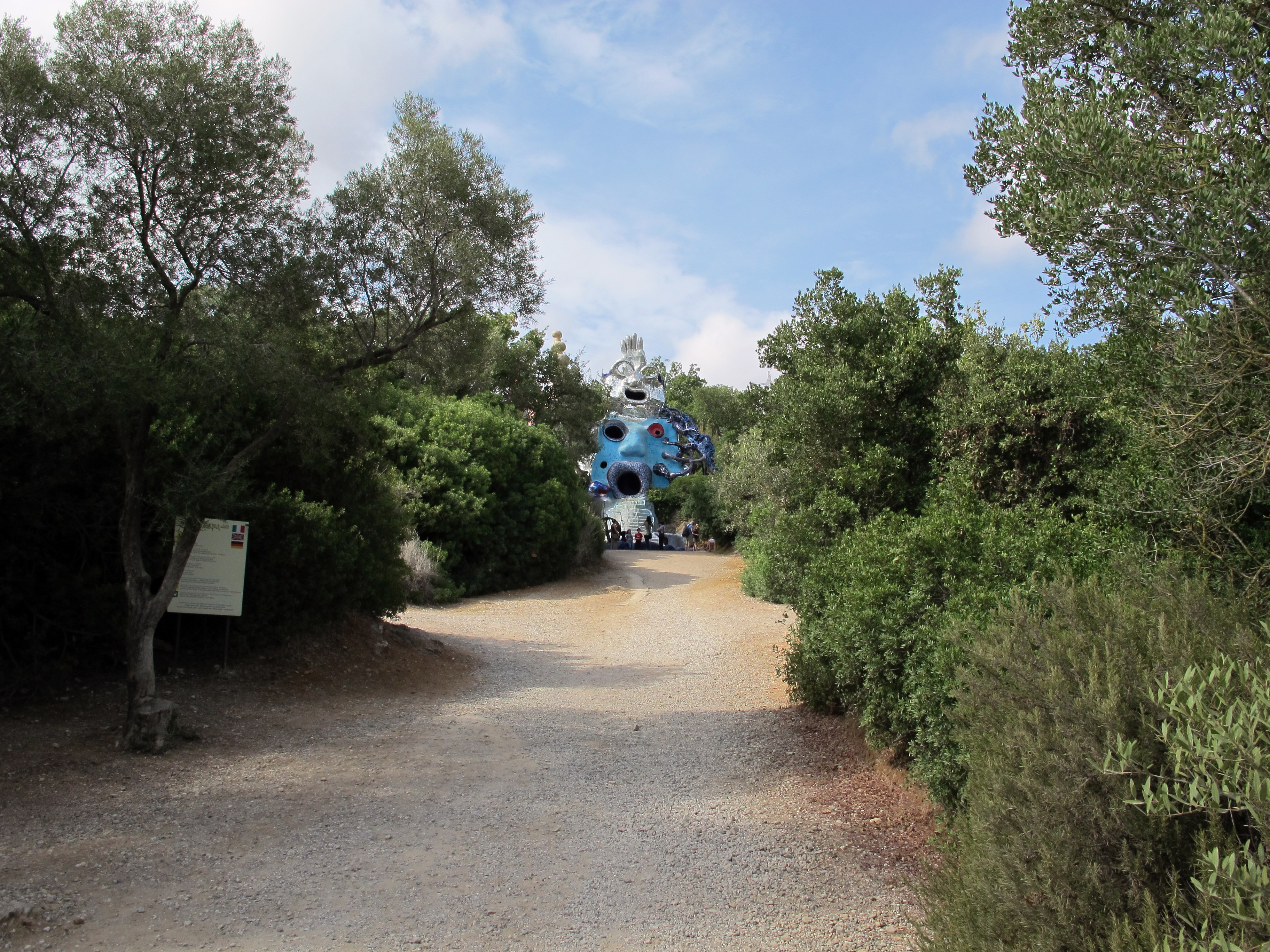
What makes the garden so disorienting is its scale against its setting. The surrounding landscape is dry Tuscan scrub, unhurried and ancient, and then suddenly a 50-foot sphinx crusted in glass and ceramic looms out of the hillside. Saint Phalle worked with her long-time collaborator Jean Tinguely and the engineer Seppo Hirvonen to anchor these figures into the earth — some are hollow, some are climbable, and the boundary between sculpture and architecture keeps dissolving. The garden opened to the public in 1998, four years before Saint Phalle died. She had enough time to see visitors wander through it looking genuinely lost, which was entirely the point. The tarot is a map of transformation, and she built the garden to function the same way — not as a destination you arrive at and understand, but one you move through and come out changed.
What to Spot
The interior of the Empress figure — a chambered living space tiled floor-to-ceiling in mirror mosaic, with rounded walls and a bed alcove, visible from the entrance threshold as a room that catches and multiplies light into something closer to a grotto than a house.
Bonus Finds
- The High Priestess figure houses a library and an apartment — look for the shelved books and domestic objects visible through its openings, evidence that this was always meant as inhabited space rather than pure sculpture.
- Jean Tinguely's kinetic metal elements are threaded through several figures in the garden — moving mechanical structures integrated into the larger mosaics, easy to overlook as decoration until you realize they're engineered to turn.
- The mosaic surfaces shift in character across the garden: some figures are built from broken mirror, others from ceramic tile, others from colored glass, each texture catching the light differently and suggesting how many years of material experimentation the project absorbed.
Share your finds and tag us — @scavtopia.
Plan your visit
Scavtopia turns this place — and any place — into an adventure. Join the waitlist.
Photo: Sailko / CC BY-SA 3.0