
Fushimi Inari Taisha
Kyoto, Japan
Story
The ten thousand torii are the famous part — that dense, tunnel-like compression of vermillion gates climbing Mount Inari above Kyoto's Fushimi ward. Visitors photograph the tunnels within minutes of arrival and call the experience complete. But the gates themselves are the thing worth slowing down for, because each one is a transaction made visible.
Fushimi Inari Taisha has stood on this mountain since 711 CE, dedicated to Inari, the kami of rice, sake, foxes, and commerce. As Japan's merchant class grew through the Edo period, so did the tradition of dedicating a torii to Inari in exchange for favor granted — a practice the shrine still accepts today. The donor's name and the date of dedication are brushed in black characters on the back of every gate. The front face is ceremonial. The back face is personal.
Walk through the tunnels facing downhill and the architecture inverts. The red lacquer that glows so photogenically from the front gives way to column after column of names, dates, and company seals — a ledger of ambition running 2.5 miles up the mountainside. Some gates record individual petitioners; others carry the names of corporations and regional businesses, their dedications placed sometime in the mid-20th century when the practice surged again. A few of the oldest inscriptions are faded to near-illegibility, the lacquer cracked at the base where weather has worked its way in for decades.
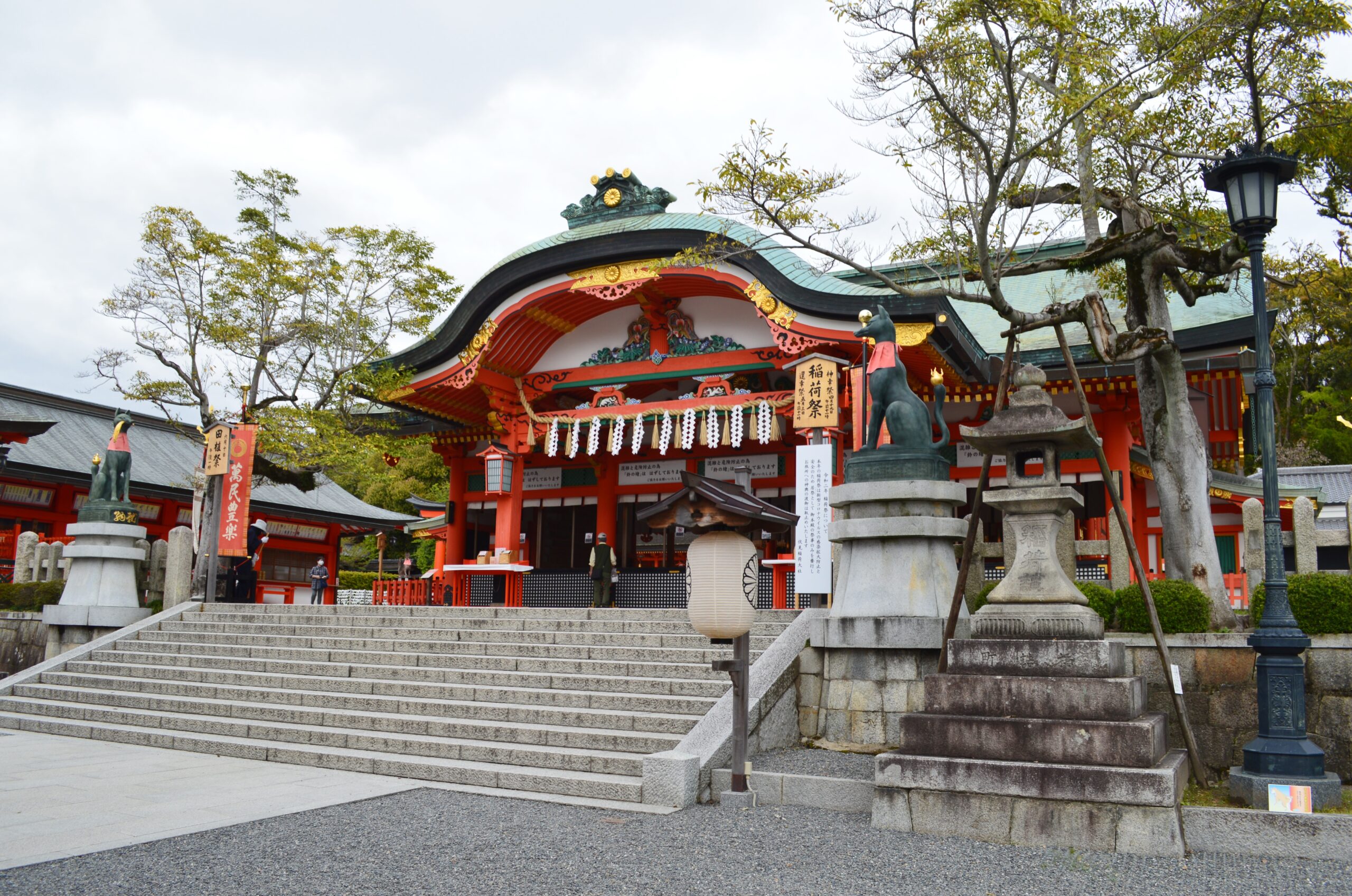
The foxes — kitsune — appear at every major subshrine as stone guardians, each one distinct in posture and wear. Some hold keys in their mouths; some grip scrolls or sheaves of rice. They are not decorative. In Inari belief the fox serves as divine messenger, and each statue was placed by a worshipper with a specific request in mind. The mountain is, among other things, an enormous archive of human wanting.
What to Spot
The reverse face of any torii gate along the upper trail, where black brushed characters record the name of the donor and the exact date of dedication — visible only when walking downhill through the tunnels.
Bonus Finds
- Stone fox guardians at the smaller hillside shrines, each one carrying a different object — a key, a scroll, a jewel, or a bundle of rice — held in its mouth or tucked beneath a forepaw.
- The stacked rows of miniature ceramic torii sold as votive offerings at the lower shrine precincts, arranged in small shrines alongside foxes barely taller than a hand.
- Mossy stone lanterns lining the lower approach paths, several so heavily colonized by lichen that their carved details — faces, inscriptions, decorative reliefs — have blurred almost entirely into texture.
Share your finds and tag us — @scavtopia.
Plan your visit
Scavtopia turns this place — and any place — into an adventure. Join the waitlist.
Photo: Saigen Jiro / CC0