
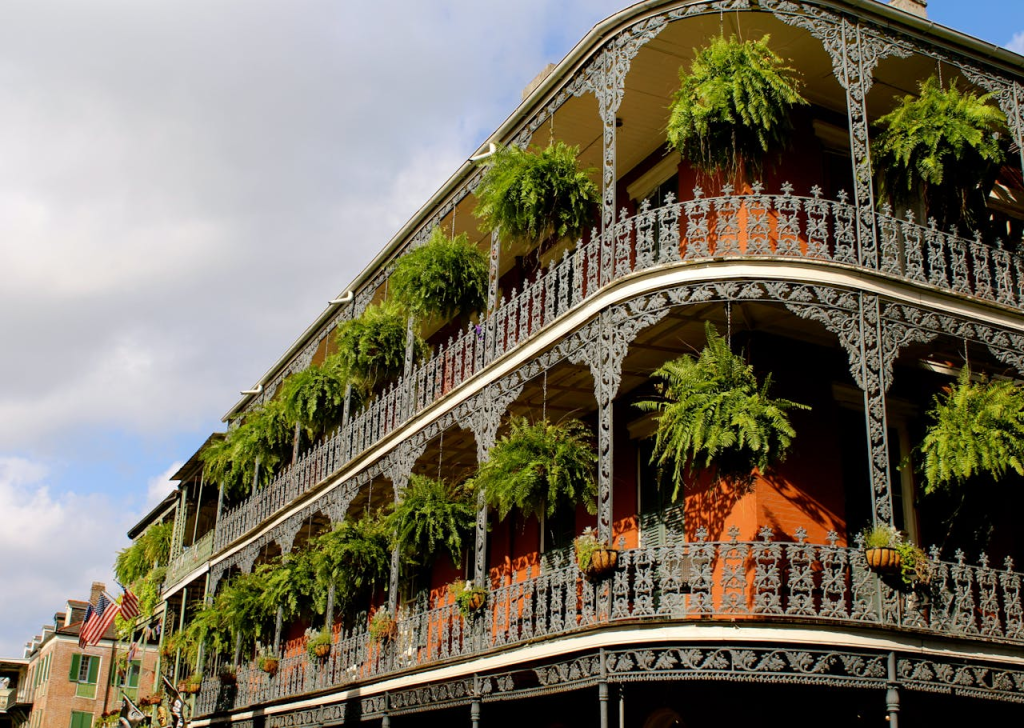
New Orleans is one of the few places where a walk can sound different depending on which corner you turn. The Jazz Trail isn’t an official route—you won’t find plaques or arrows telling you where to go—but the city leaves clues everywhere. A balcony with a bent trumpet welded into the railing. Brass notes drifting from an open doorway. A patch of sidewalk where you feel, for no reason at all, like something important started here.
If you follow the sound, the city starts revealing itself.
It Begins at Congo Square
Congo Square in Louis Armstrong Park looks calm now—trees, open space, a steady breeze coming off the water. But if New Orleans has a heartbeat, it started here. Enslaved Africans gathered on Sundays to dance, drum, trade, and create rhythms the city had never heard before.
Look down and you’ll see bronze circles and symbols embedded in the pavement. Most visitors assume they’re decorative. They’re not. They’re signposts for the oldest musical roots in the city.
Stand still for a second and the place almost vibrates.
The Alley Behind Preservation Hall
Preservation Hall gets the line out front, but the alley behind it gets the secrets. The brick walls catch the echo of rehearsals, and if you’re lucky, you’ll hear a trumpet or clarinet run scales from somewhere inside—notes that sound like they slipped out of time.
Check the ground. There’s a stretch of old cobblestones patched into the modern pavement. Those stones are older than the hall itself, older than jazz, older than most of the buildings around it. People carried instruments across them long before anyone called the music “jazz.”
Where Frenchmen Street Quietly Changes the Rules
Frenchmen Street gets loud after dark, but if you walk it in the late afternoon, you catch the quieter, stranger details. The hand-painted signs above the bars. The crooked shutters that were never fully fixed. The murals that look like they’ve been painted over a dozen times but somehow still glow.
Drift toward the corners, not the center. That’s where you notice the small things: a single trumpet mute sitting on a windowsill, the reflection of a neon saxophone bent inside a puddle, a balcony column carved with initials from musicians who probably don’t play together anymore.
Nothing labeled. Everything significant.
Louis Armstrong’s Shadow on Rampart Street
Walk along Rampart and you’ll feel it—the shift from the Quarter’s chaos to something deeper. The old J&M Recording Studio is here, the tiny, ordinary-looking spot where legends cut tracks that rewired American music.
The building doesn’t announce itself. You spot it by the old tiles near the entrance and the faded lettering that refuses to go away. Step close to the bricks and you’ll see thin hairline cracks from decades of humidity and history. Honestly, the whole place feels like it’s holding stories in its walls.
The Corners Are the Clues
New Orleans hides its jazz history in small things, not big signs. That’s what makes walking the Jazz Trail feel more like an urban scavenger hunt than a history lesson.
Keep an eye out for:
- Brass screws shaped like music notes hammered into a few unexpected doorframes
- A balcony on Chartres Street with a railing that curls like treble clefs
- Faint chalk markings musicians still use to claim busking spots during festivals
- A shutter on Burgundy Street with a trumpet etched into the wood grain
- A shop window that always has one instrument in the display turned slightly wrong—locals swear it’s intentional
None of these details are famous. But together, they build the trail.
Walk It Slow
The Jazz Trail isn’t about checking off landmarks. It’s about letting your pace change. If you follow the corners, the echoes, the subtle shifts in sound, you end up tracing the path musicians took long before New Orleans was on any travel brochure.
Walk it at sunset if you can. The light hits the brass, the brick, the balconies just right. The whole city feels tuned to a different key.
And once you’ve walked New Orleans this way, you start hearing music in other cities too—quiet, subtle, tucked into their own corners.
The world is a game. And you’re already playing.