
Mehrangarh Fort
Jodhpur, India
Story
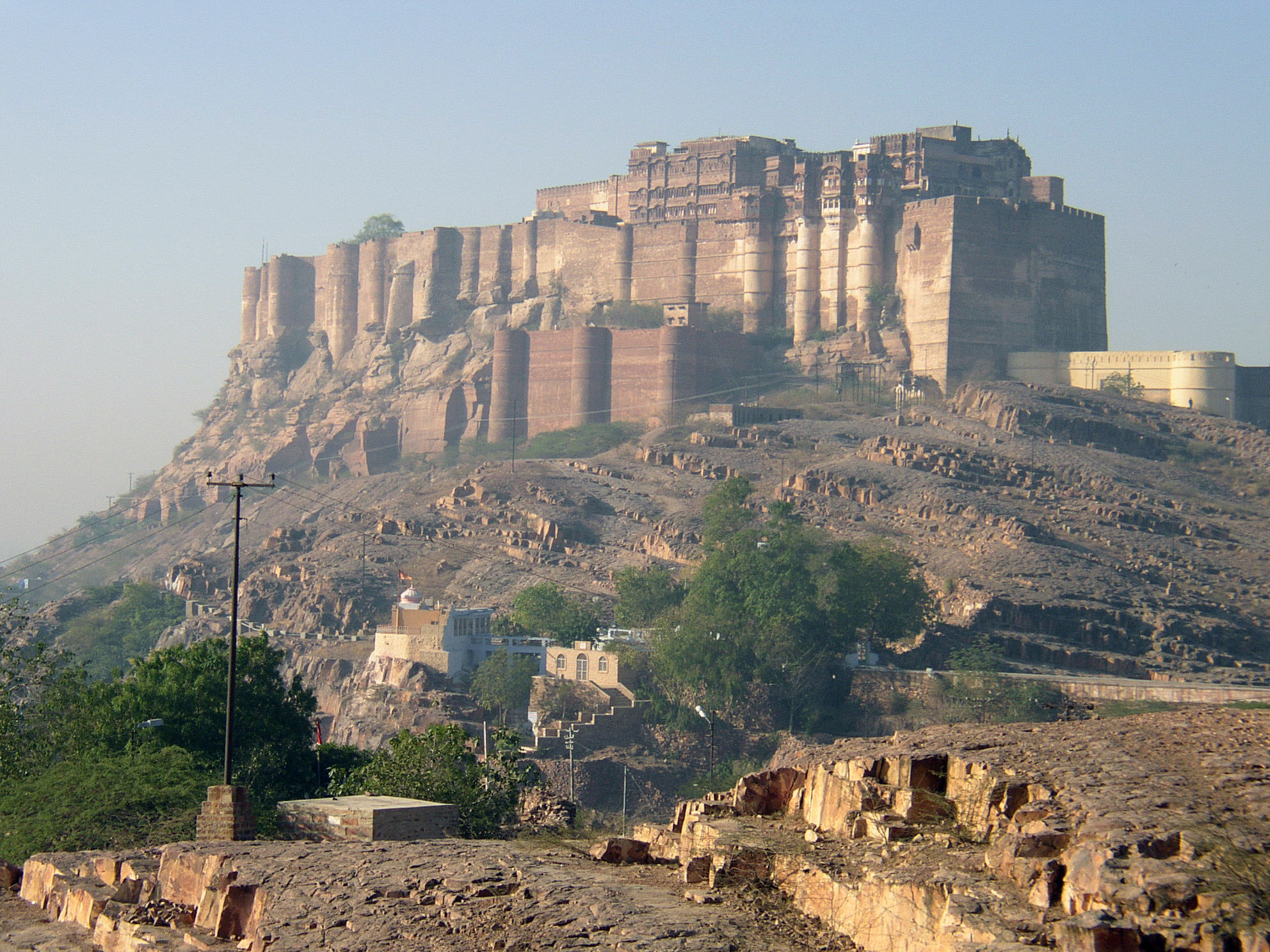
Mehrangarh was never meant to look approachable. Rao Jodha founded it in 1459 on a sheer sandstone outcrop above Jodhpur — a site so brutal that legend says a hermit named Cheeria Nathji cursed the hill when he was displaced to make way for the foundations. The curse, supposedly, was drought. Jodha's response was to entomb a man alive in the walls as a counter-offering. Whether any of that is true matters less than what it tells you about the fort's atmosphere: this place was built to communicate permanent, unanswerable power.
The bulk of the structure visible today dates to the 17th century, accumulated by successive Rathore rulers who added palaces, courtyards, and gates over generations. Seven gates mark the ascent, each with its own history of conquest. Jai Pol was raised by Maharaja Man Singh in 1806 to celebrate victories over the armies of Jaipur and Bikaner. Fatehpol commemorates Maharaja Ajit Singh's defeat of the Mughals. The gates aren't decorative — they're a layered record of dominance, each one a timestamp in stone.
What earns Mehrangarh its breath-taking quality isn't the scale, though the fort rises 400 feet above the plains like a frozen wave. It's the surface. Up close, the sandstone façades dissolve into latticework so dense and precise it seems impossible that stone could hold that many cuts. Jali screens — pierced stone grilles — cover windows and galleries in geometric and floral patterns that filter the desert light into something gossamer. Rudyard Kipling, visiting in the 19th century, called it 'a palace that might have been built by Titans and colored by the morning sun.' The light, at least, he got exactly right.
What to Spot
The handprints pressed into the stone of Loha Pol — the Iron Gate — small ochre palms left by the royal satis, women of the court who walked into their husbands' funeral pyres, the last impression of a life pressed permanently into the fort's final entrance.
Bonus Finds
- The collection of howdahs — elaborately carved elephant saddles in gold and silver — displayed in the fort's museum, some large enough that the scale only registers when you stand beside them.
- The Chamunda Mataji temple inside the fort complex, dedicated to the goddess Chamunda, which Rao Jodha himself installed in 1460 when the fort was founded — one of the oldest surviving elements of the original construction.
- The cannon-ball scars still visible in the stonework near the upper ramparts, physical evidence of the sieges that the fort's gates were built to commemorate.
Share your finds and tag us — @scavtopia.
Sightings
- The Dark Knight Rises (2012) — the Pit prison sequence, from which Bruce Wayne must escape, draws on Mehrangarh's vertical cliff faces and fortress silhouette for its look — though the production used a combination of locations and sets, the fort's visual DNA is legible in the finished scenes
Plan your visit
Scavtopia turns this place — and any place — into an adventure. Join the waitlist.
Photo: Knowledge Seeker / Public domain