
Arcosanti
Mayer, Arizona
Story
Paolo Soleri broke ground here in 1970 with a genuinely radical premise: that the city itself was the problem. Sprawl, he argued, was an energy disaster — a form of entropy made physical. His answer was arcology, a word he coined by fusing architecture and ecology, and Arcosanti was its first proof of concept. Rising from a basalt mesa in central Arizona, 70 miles north of Phoenix, the complex was designed to house 5,000 people in thirteen interlocking structures dense enough to walk everywhere and shaped to harvest the desert sun.
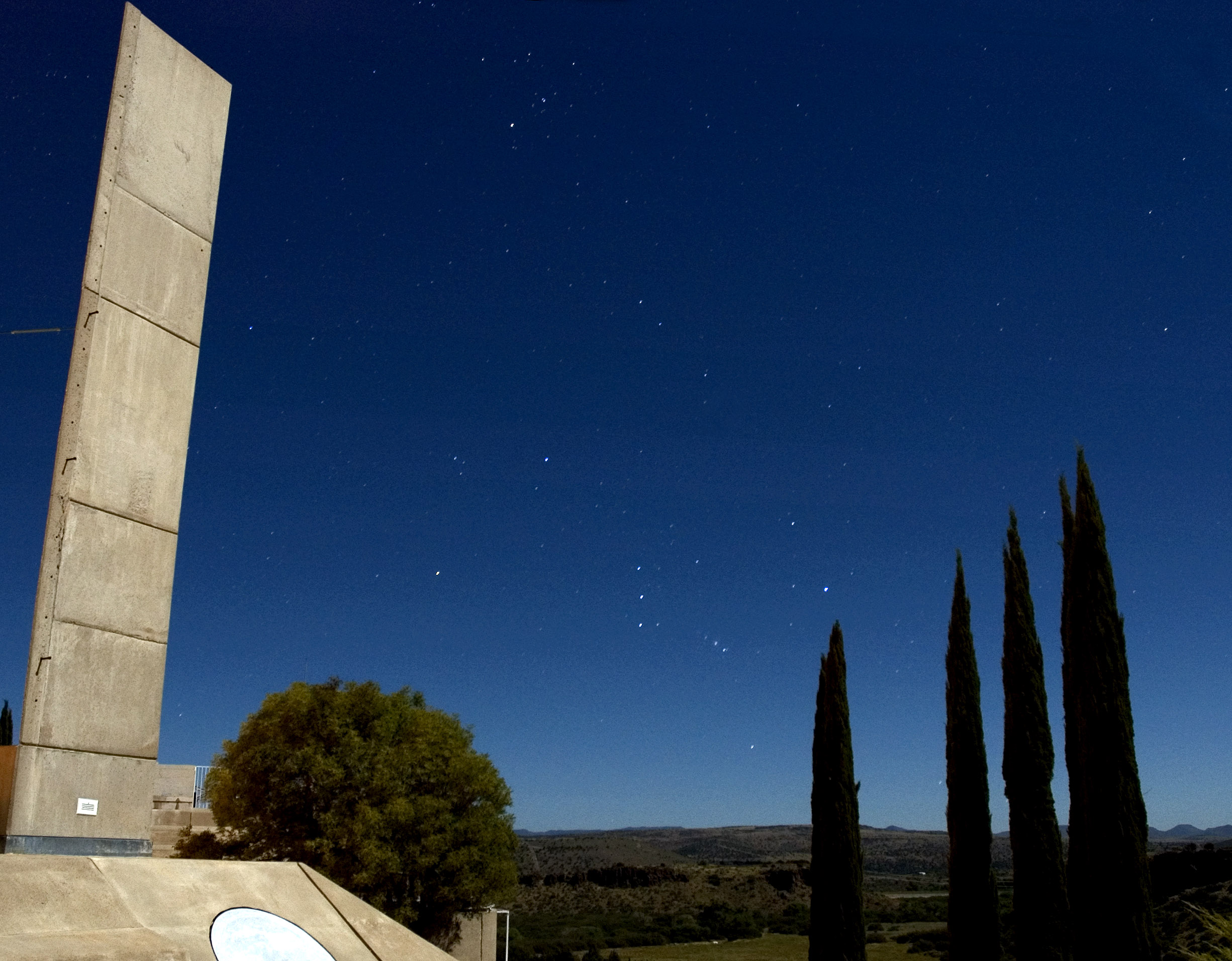
The population never reached 5,000. It hovered, for most of its history, between 50 and 150 — students, volunteers, idealists, and working residents who cast bronze bells by hand and sold them to keep the lights on. That gap between ambition and reality is part of what makes Arcosanti worth sitting with. The buildings themselves are the argument: curved concrete vaults oriented to the winter sun, tilt-up panels cast directly in the surrounding silt so the walls carry the color of the mesa, apses shaped like quarter-spheres sheltering the bronze foundry.
Soleri designed this place as a living classroom, and construction was always the curriculum. Workshop participants from around the world came for five or six weeks at a stretch, poured concrete, attended lectures, and left their handprints — sometimes literally — in the fabric of the buildings. The most recently completed structure was finished in 1989. The Cosanti Foundation laid off most of its staff in 2025 and formally ended agricultural operations at the end of that year, leaving the complex in a period of uncertain transition. What remains is still startling: a city-in-miniature perched above a canyon, insisting, quietly, that another way of building was possible.
What to Spot
The bronze-casting apse — a massive quarter-sphere concrete shell open at its curved face — with the dark interior where the foundry equipment and ceramic bell molds sit in the shadow of the dome.
Bonus Finds
- The concrete surfaces throughout the complex show a distinctive texture and warm desert color: each panel was cast in a bed of local silt, pressed directly from the surrounding mesa, so the building material and the landscape share the same earth.
- Several panels cast during workshop sessions carry embedded relief art — abstract forms and impressions pressed into the concrete before it set, made by participants who were simultaneously students and builders.
- The two large barrel vaults, open at each end, frame views of the Aqua Fria canyon below — the geometry is functional (passive solar orientation) but the effect, standing inside, reads as pure theater.
Share your finds and tag us — @scavtopia.
Sightings
- Nightfall (1988) — filmed on location at Arcosanti, with residents appearing as extras in this science fiction adaptation of the Isaac Asimov story
Plan your visit
Scavtopia turns this place — and any place — into an adventure. Join the waitlist.
Photo: No machine-readable author provided. Ischlueter assumed (based on copyright claims). / CC BY-SA 3.0