
Château de Pierrefonds
Pierrefonds, France
Story
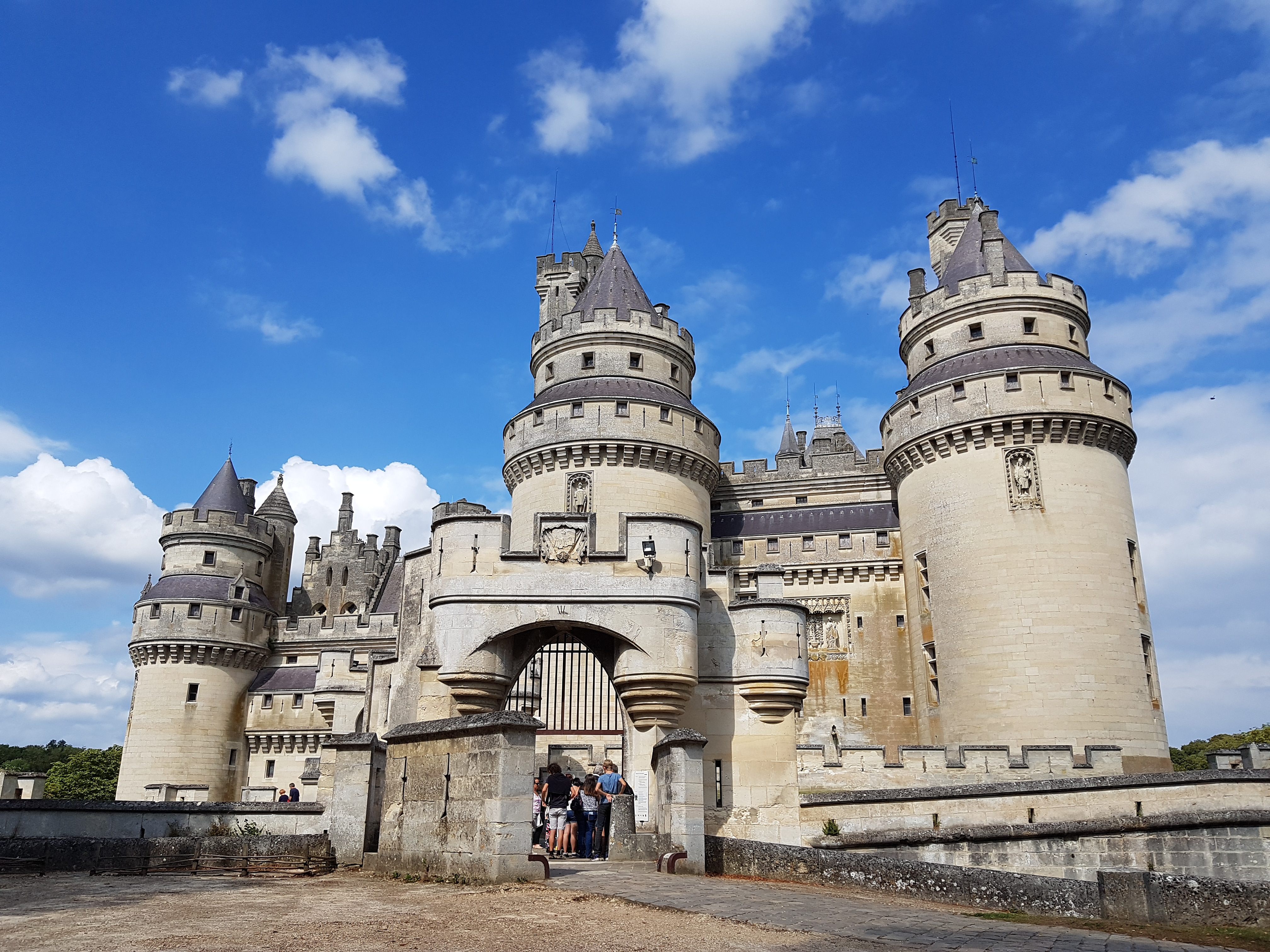
Napoleon I bought Pierrefonds in 1810 for less than 3,000 francs — roughly the price of a decent horse. He got a collapsed ruin, a romantic wreck that had been deliberately dismantled on Cardinal Richelieu's orders in 1617 after a brief siege. The exterior works had been razed, the roofs torn off, the towers holed. For two centuries it sat open to the sky, picturesque enough that Corot painted it repeatedly between 1834 and 1866.
Then Napoleon III arrived. He visited in 1850, and by 1857 he had handed the ruin to Eugène Viollet-le-Duc with instructions to restore it. By 1861, the ambition had grown: not a repair but an imperial residence, rebuilt from almost nothing. Viollet-le-Duc — the same architect reshaping Notre-Dame, Carcassonne, and the walls of Avignon — spent the next two decades not reconstructing what had been but imagining what a great 14th-century fortress ought to have been. The exterior reflects his deep knowledge of medieval military architecture. The interior is something else: polychrome invention, a vision of the Middle Ages filtered through a 19th-century mind. When Napoleon III fell from power in 1870, funding dried up and the decoration of many rooms stopped mid-sentence. Viollet-le-Duc died in 1879; the works limped on under Maurice Ouadou and Juste Lisch until 1885, with whole chambers left unfinished.
The result is a castle that exists nowhere in time — too complete to be a ruin, too invented to be a restoration. Its eight towers rise above the forest of Compiègne like something a child drew from memory of every castle ever described. That implausibility is the point. Viollet-le-Duc didn't restore Pierrefonds; he conjured it.
What to Spot
The sculpted figures of nine female allegorical knights — each representing a virtue — mounted in niches along the exterior of the main residential range, armor-clad and individually characterized, their stone faces weathered but still distinct.
Bonus Finds
- The Salle des Gardes on the ground floor retains Viollet-le-Duc's polychrome painted decoration — geometric patterns and heraldic motifs in colors that feel more archaeological fantasy than medieval record, the paint surface visibly interrupted where funding ran out.
- Above the main entrance portal, a carved salamander appears in the decorative stonework — an emblem of Francis I, repurposed here as part of Viollet-le-Duc's layered symbolic program for the castle's facade.
- The château's keep, the Tour de César, preserves original 15th-century masonry alongside the 19th-century reconstruction — the join between old stone and new is legible up close, a seam in time running vertically up the tower wall.
Share your finds and tag us — @scavtopia.
Sightings
- Les Visiteurs (1993) — the castle's exterior stood in for the medieval world the time-traveling knight departs from
- The Man in the Iron Mask (1998) — Pierrefonds doubled as a French royal fortress in this adaptation of the Dumas story
- The Messenger: The Story of Joan of Arc (1999) — Luc Besson shot exterior sequences here, using the castle's towers and battlements as a backdrop for the siege sequences
- Merlin (2008) — the BBC series used Pierrefonds as the exterior of Camelot across all five seasons
Plan your visit
Scavtopia turns this place — and any place — into an adventure. Join the waitlist.
Photo: Crazyswan85 / CC BY-SA 4.0