
Bodie Ghost Town
Bodie, California
Story
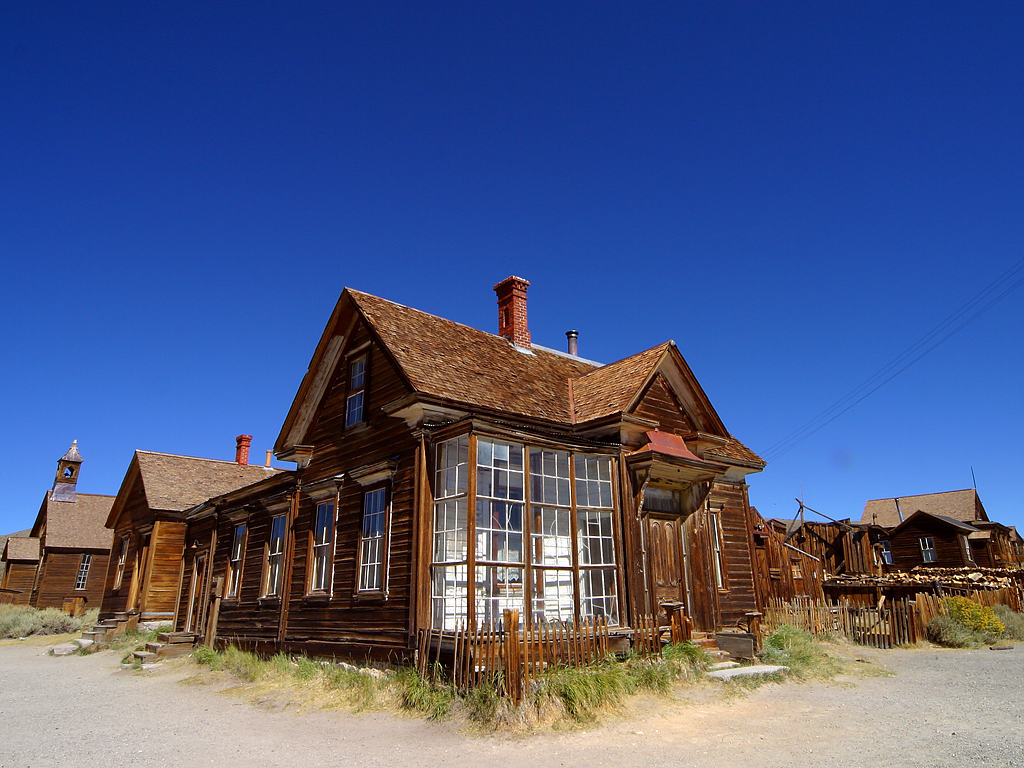
Bodie peaked and collapsed inside a single generation. Gold was struck here in 1876, and by 1879 the town held 2,000 buildings and roughly 8,000 people — a raw, violent place at 8,379 feet in the eastern Sierra Nevada where winters regularly killed the unprepared. Then the ore thinned, fires tore through twice, and Bodie simply emptied. The last residents left in the early 1940s. The state took it over in 1962 and made a policy decision that defines everything you see today: arrested decay. Not restoration, not preservation — just the slow drift of things as they are, held at the moment of abandonment.
The result is uncanny. Calendars still hang on walls. Bottles line shelves in the drugstore. A child's shoe sits in a corner of a house where a child once lived. The buildings lean into the high-desert wind without collapsing, their grey timber bleached by altitude and cold. Because nothing has been cleaned up or staged, the town doesn't read as a museum — it reads as an interruption. As if the people left this morning and simply haven't come back yet.
Walking the streets in full sun, with the treeless hills pressing in from every direction, the silence isn't peaceful. It has weight. Bodie in its heyday was known for shootings, robberies, and a civic culture so rough that one young girl, arriving with her family in the late 1870s, reportedly wrote in her diary: "Goodbye God, I'm going to Bodie." Whether the story is true barely matters — it lodged in the historical record because it fit. This was exactly that kind of place.
Now it sits nearly unchanged under the same unforgiving sky, and the stillness inside those weathered rooms is the closest thing California has to a stopped clock.
What to Spot
The Bodie Bank vault, its heavy iron door still swung open inside the collapsed and skeletal remains of the bank building — the door's ornate cast lettering and combination mechanism intact and readable from the open exterior walls.
Bonus Finds
- The Methodist Church, the best-preserved building on the site, still holds its original wooden pews and a small pump organ against the far wall — the only structure in Bodie that was ever regularly maintained, largely because the congregation kept it in use longer than any other institution in town.
- Several residential interiors, visible through windows, still show kitchen tables set with dishes and food tins left exactly as the last occupants arranged them — the arrested-decay policy means nothing has been moved since the state took over in 1962.
- The Standard Mill on the hill above town, where ore was crushed and processed, retains its heavy machinery in place: stamp mill equipment, ore chutes, and timber framing that give a clearer sense of the industrial scale behind Bodie's brief wealth than the domestic buildings below.
Share your finds and tag us — @scavtopia.
Plan your visit
Scavtopia turns this place — and any place — into an adventure. Join the waitlist.
Photo: PDPhoto.org / Public domain